S01E01 - Steganography
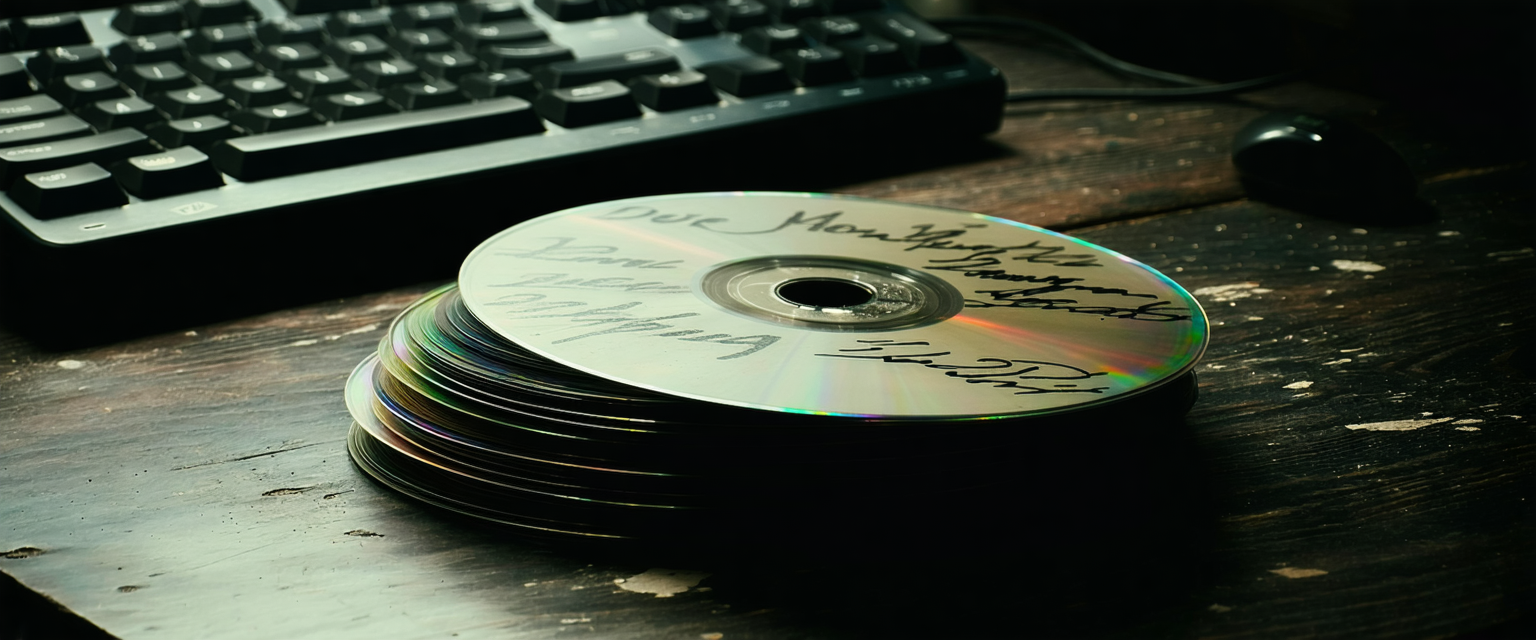
Elliot’s apartment has a shelf of CDs. Each one has a band name scrawled on it in marker. If you walked in, you’d see a music collection. Maybe a little retro, but nothing unusual.
Except they’re not music. They are music, on the surface. Underneath, each CD carries encrypted files that Elliot has collected by hacking the people in his life. The tool visible on his screen is DeepSound.
TL;DR
| 🎬 Reel or Real? | ✅ real. DeepSound is a real, downloadable tool. Steganography has been used by intelligence agencies for decades. |
What Is Steganography
Steganography is hiding data inside another file: an image, a video, or in this case, an audio track. It still looks and behaves normally. You can play the CD and hear music. Hidden data sits underneath, invisible without the right tool and password.
It’s different from encryption. Encryption makes data unreadable. Steganography makes it invisible. Elliot uses both.
What’s on Screen
You can briefly see DeepSound’s interface on Elliot’s monitor. He loads audio files, embeds his collected data into them, encrypts the result with a password, and burns the output to CDs. CDs get labelled with band names and go on the shelf.
Anyone who finds them (law enforcement, a roommate, whoever) plays a CD and hears music. Without DeepSound and the password, the hidden data doesn’t exist as far as they’re concerned.
How LSB Works
DeepSound uses a technique called LSB (Least Significant Bit). Here’s what that means.
Audio is stored as a sequence of numerical samples. In a 16-bit .wav file, each sample is a number between 0 and 65,535. The last bit of each sample, the least significant bit, contributes the smallest possible change to the sound. Flipping it changes the sample value by 1.
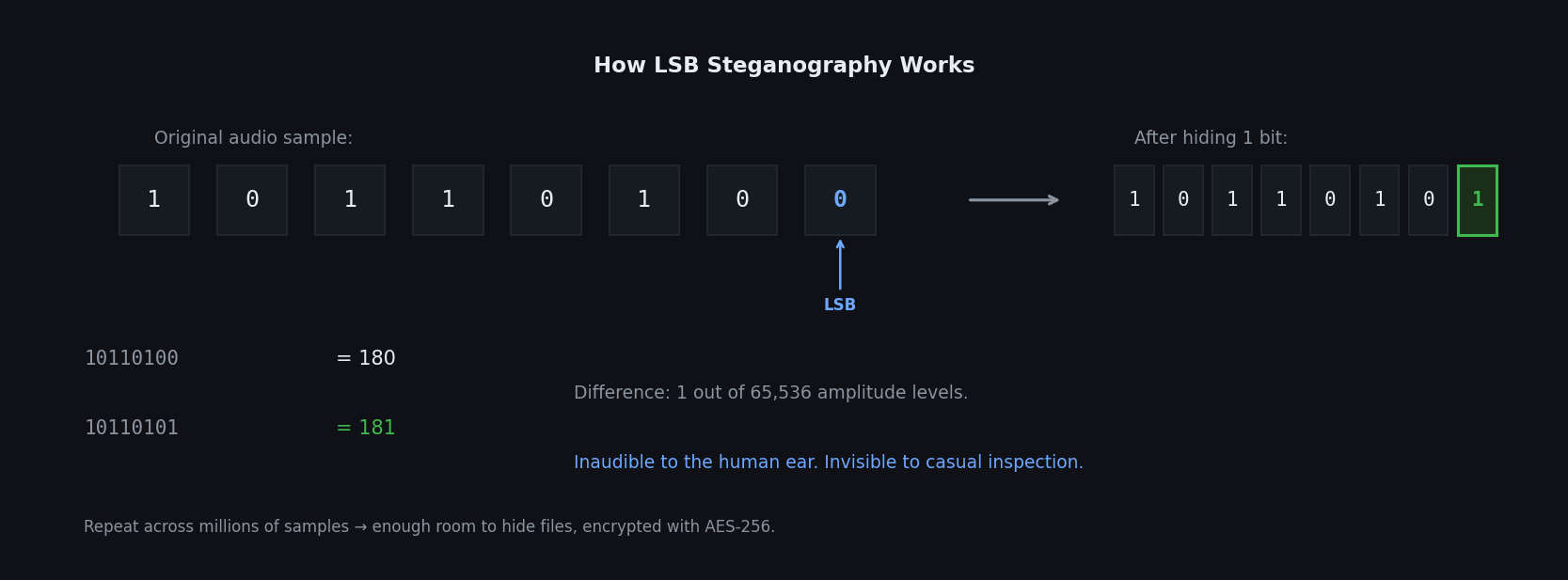
180 becomes 181. Out of 65,536 possible values, that’s a difference your ear can’t detect and your audio player won’t flag. But that one bit now carries hidden data.
Repeat this across millions of samples in a 4-minute song, and you’ve got enough room to embed files. DeepSound then encrypts the whole thing with AES-256 before writing it out.
DeepSound Specifics
A few things about the tool itself:
- Real and downloadable: it’s a free Windows application. It has been around since at least 2011.
- Format limitation: only works with uncompressed audio: .wav and .flac. Not .mp3. Compressed formats don’t have enough redundant bits to hide data in without audible distortion.
- Encryption: AES-256, password-protected. Even if someone suspects the files contain hidden data, they can’t extract it without the key.
- CD burning: DeepSound can write directly to disc. Output is a standard audio CD that plays in any player.
Elliot’s choice of CDs over USB drives or cloud storage isn’t just aesthetic. CDs are read-only once burned, can’t be remotely wiped, and don’t show up in cloud account logs. It’s an air-gapped backup with plausible deniability built in.
What the Show Skips
Steganography isn’t undetectable. There are tools designed to find it.
- StegExpose: analyses audio and image files for statistical anomalies in bit distribution. LSB embedding changes the randomness profile of the least significant bits, and steganalysis tools can flag this.
- Audacity spectrum analysis: a careful examiner comparing the original audio file to the steganographic version could spot differences in the frequency spectrum. But they’d need the original, which Elliot presumably doesn’t leave lying around.
- File size: a .wav file that’s slightly larger than expected for its duration could raise suspicion to someone who knows what they’re looking for.
None of these are easy or routine. A typical forensic examiner imaging Elliot’s apartment wouldn’t think to run steganalysis on a shelf of music CDs. That’s the whole point.
Closing
Those CDs aren’t just storage. They’re operational security. A backup system designed to survive a search, a seizure, or a paranoid moment. Music is the cover story. Data rides underneath.
Steganography won’t stop a targeted forensic investigation by someone who already suspects it’s there. But it’ll sail past everyone else. And for Elliot, everyone else is the threat model.
Next: S01E01 - Framing Colby.